How was Notte di Fiaba born?
The desire to celebrate is probably in the DNA of the people of Riva del Garda themselves. Local chronicles take us back to the distant nineteenth century, describing the first festivities held whenever a notable figure announced their stay in town. Riva was already taking its first steps in tourism, and along the long road that has led to the present day, tourism has always been the driving force behind the organisation of most events.
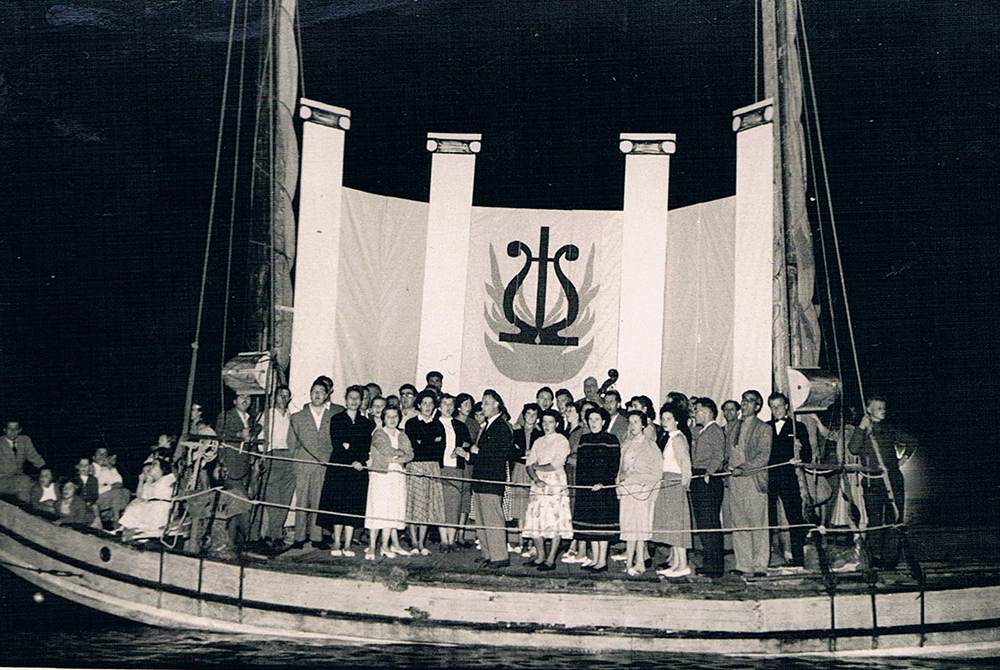
The same was true for Notte di Fiaba. The first edition of the event took place on 13 September 1950.
It was an era in which Italy had to be rebuilt, still worn down in the aftermath of the war. Riva too had to find its way again, and tourism was beginning to bear fruit once more. The season, however, was short — it did not extend beyond summer. Mass tourism did not yet exist, and the very concept of tourism was quite different from today. So, in order to extend the season into September, the idea arose of organising activities capable of drawing tourists to town. From a meteorological point of view, the period was favourable, and "deseasoning" was already a term that had entered the working vocabulary of local operators.
It fell to the Azienda di Soggiorno to put together a programme, which was given the title "Settembre d'oro" — Golden September. The idea was to bring together a variety of events, especially at weekends, designed to spark people's interest and encourage them to visit the town.
The celebration was paired with what was called "Frutti d'oro" — Golden Fruits — an exhibition of local agricultural produce that filled the Brolio with scents and colours. Even then, the importance of "selling" the territory as a whole — its natural beauty alongside its agricultural products — was already understood. Today we would speak of marketing strategies; back then, it was simply a happy intuition. Within a few years, this event, together with Notte di Fiaba, became the main highlights of the town's autumn programme.
The raft parade
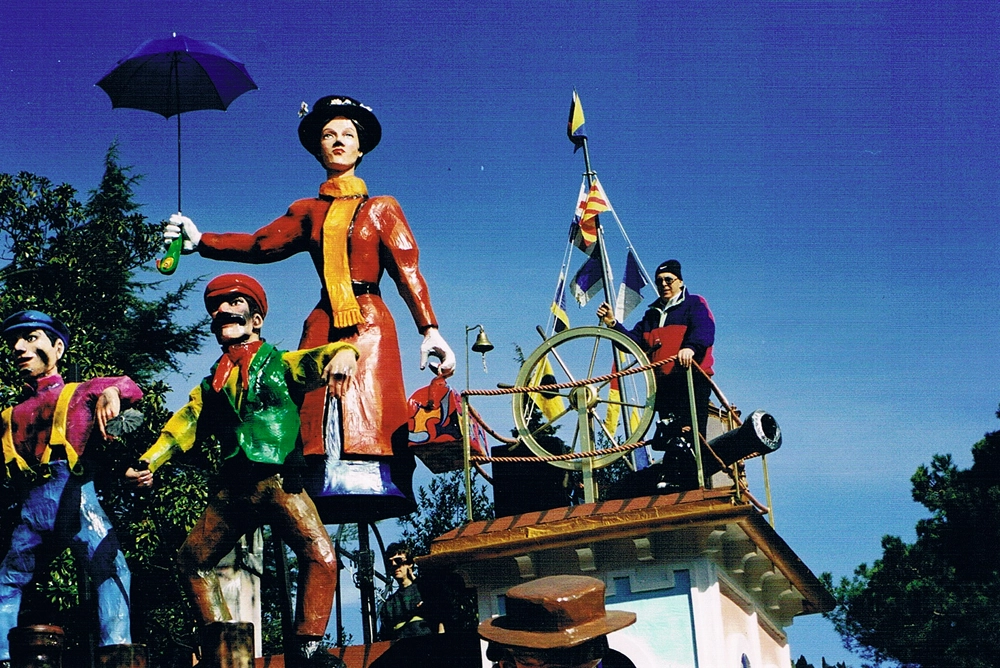
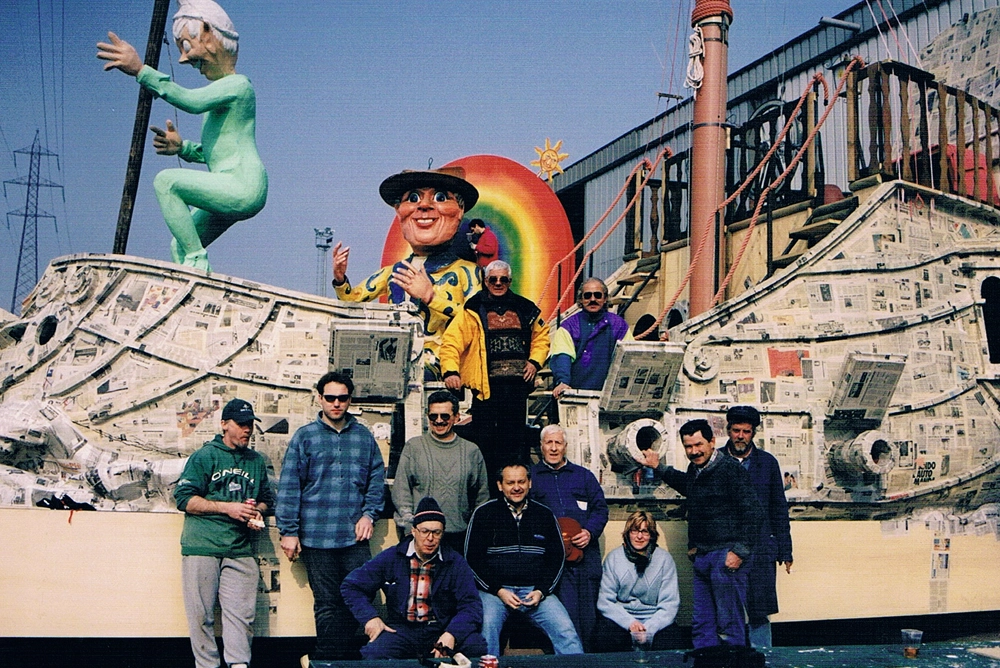
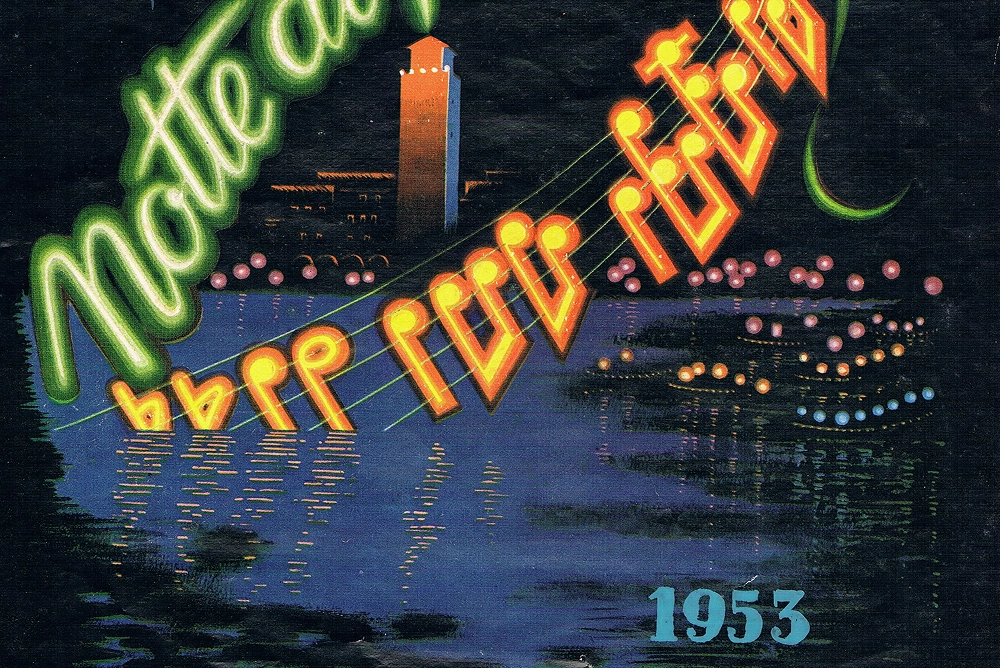
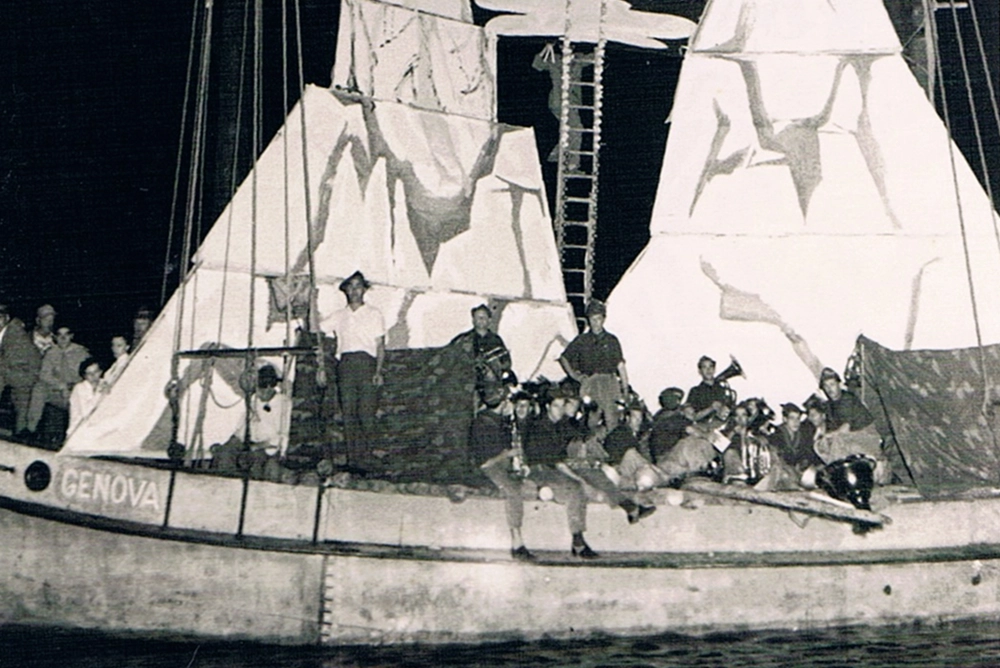
For the first time, the idea arose of organising a kind of allegorical float parade, with no restrictions on subject matter. Only instead of traditional floats, the concept was to mount the structures on rafts and tow them across the water in the gulf in front of the town.
The idea was an immediate hit, and many local associations joined in with great enthusiasm, enough to get this ambitious undertaking off the ground.
From the very beginning, and for several years, these initiatives also enjoyed the support of provincial institutions and, on some occasions, bodies from outside the province as well.
Among the first to take part in the parade were La Rumorosa, La Benacense, the Tennis Club, the Fraglia della Vela, the Amici dell'Arte, the Moto Club Benacense, the SAT, the Compagnia d'Arte Varia, the Scouts, the Fire Brigade, the ACLI, the Coro Castel di Arco, the Orchestra Rossini di Riva… and many others.
The parade took the name "Notte di Fiaba" and immediately became a competition for decorated and illuminated vessels. Needless to say, alongside the enthusiasm of the participants, there was also tremendous dedication in the building and animating of the floats.
It was a winning idea. The concept was entirely new to the whole province and its neighbours alike, and from its very first edition the event made a great impression, drawing tens of thousands of spectators to town.
In subsequent editions, the event grew and developed, while keeping the vessel parade as its centrepiece — one in which ever-growing numbers of locals took part.
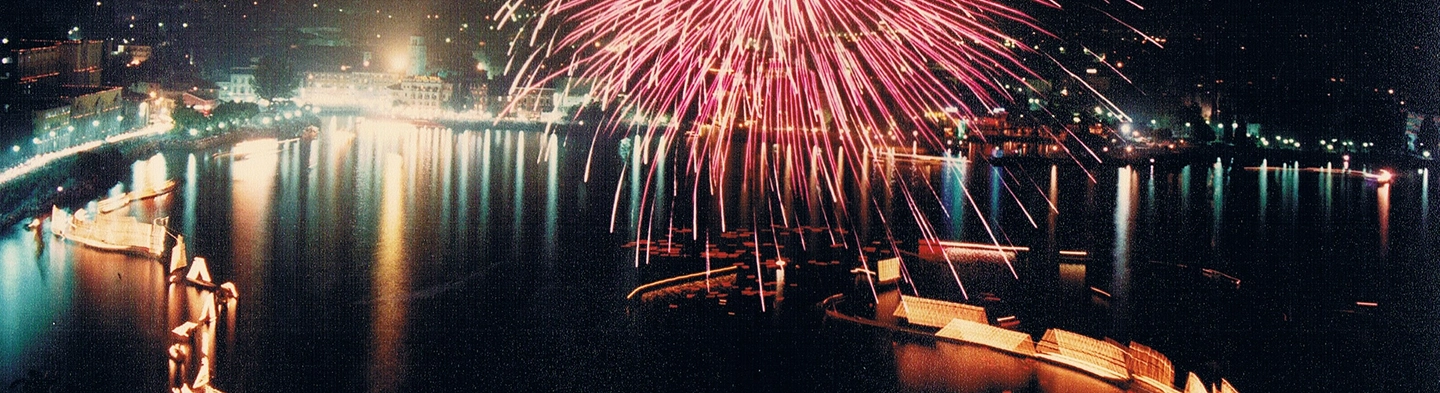
From the second edition onwards, fireworks were added, and these too proved a tremendous success, not least because they were a completely new experience for many spectators.
The year of crisis
The event grew year after year, earning favourable press coverage and the satisfaction of local operators. At the same time the organisation was steadily improving, though not without the difficulties inherent in running a large-scale event. Small and large problems were tackled one by one with tenacity and ingenuity, except for those caused by bad weather, which had already managed to disrupt more than one edition.
An organising committee was formed almost immediately, relieving the Azienda di Soggiorno of direct responsibility for the event. Over the years it brought together the most prominent figures in the town and was chaired by the sitting mayor. Among the many locals who played a role in those years were: Ettore Righi, Dante Dassati, Achille Dal Lago, Mario Pignoli, Mario Rigatti, Achille Chincarini… and nearly all the town's associations, some of which are still active today, while others have since disappeared.
A separate committee was also formed for the Frutti d'oro. Regulations were drawn up for the parade and for the construction of the vessels, and further events were added to the programme, where music — through bands, choirs and orchestras — was always a defining feature.
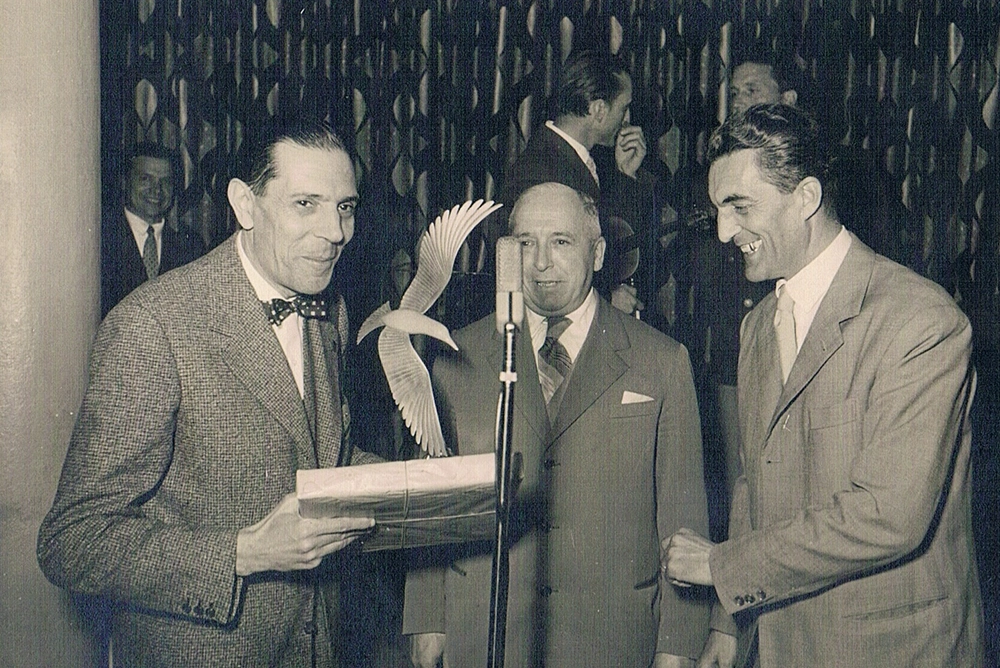
Up to 1963, thirteen editions had taken place — but this was to be the year of crisis. Not because enthusiasm had waned, but due to financial difficulties. The event already cost several million lire, and covering the expenses had become complicated, even though spectators had been paying for their seats in the lakeside stands from the very beginning.
So after thirteen successful editions, Notte di Fiaba was shelved, to the considerable disappointment of the people of Riva del Garda.
A new attempt
It was not until 1982, again at the instigation of the Azienda di Soggiorno, then chaired by Carlo Modena and still wrestling with the challenge of "deseasoning", that the event was revived, with a new organising committee. The local associations swung back into action and sign-ups for the construction of new allegorical floats were quickly gathered — the floats remaining the centrepiece of the event.
Although several years had passed since the first edition, the old organisational problems resurfaced, alongside new challenges imposed by a different era, already rich in regulations of various kinds that had to be observed.
Funding the event remained the organisers' primary headache, and once again they resorted to charging spectators a ticket — this time an entry fee for the lakeside part of the town. To this end, all access routes to the historic centre were cordoned off.
The new organising committee of those years, chaired by Carlo Modena, was made up of: Andrea Santorum, Albino Marchi, Bruno Pasini, Guerrino Delana, Giancarlo Angelini, Orfeo Donatini, Stelio Tedde, Gino Prezzi, Giulio Bondavalli, Mario Andretta, Agostino Rosà, Renato Martinelli, Enzo Bassetti.
The event recaptured its former success. Each edition drew more spectators, attracted by an ever-richer and more varied programme, in which allegorical floats and fireworks remained the greatest draw.
But the challenges were many and the organisation grew ever more demanding. So, with a mock funeral notice posted on the walls of the town in 1987, the event was suspended once again, after five new editions.
The Medieval phase
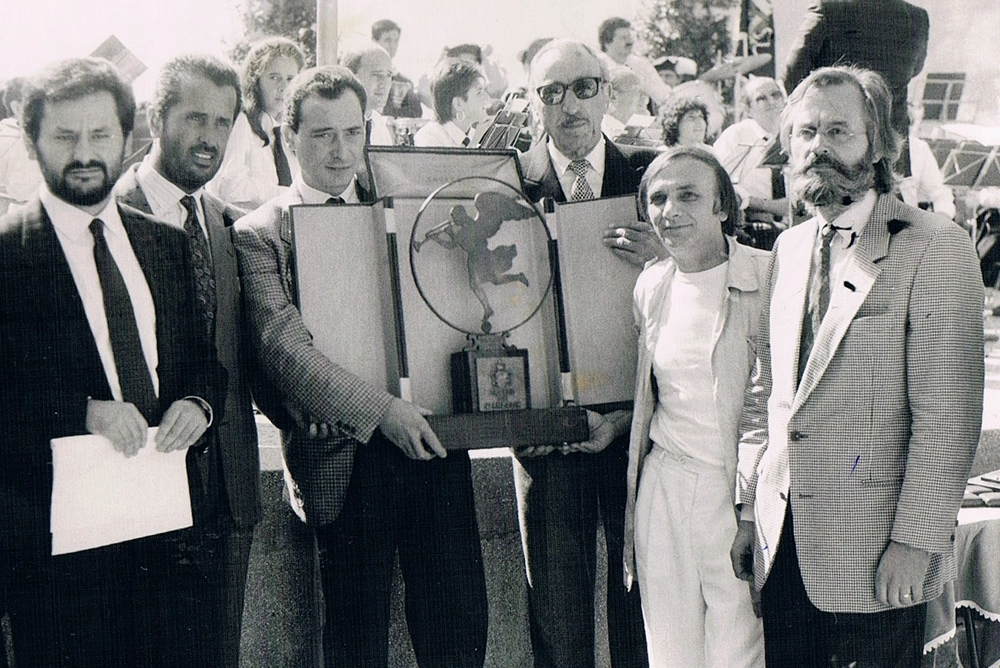
For six years the event would not be held again, until in 1993, Mayor Enzo Bassetti reconstituted a promoter committee entrusted to Giancarlo Angelini, to bring the event back to life.
It quickly became clear that the complexity of the regulations in force and the new costs of reviving the event in its original form would not be sustainable. On top of these came new safety and navigation regulations that made it extremely difficult to stage the vessel parade again — not least because finding a place to build the floats had become problematic, as the Foci del Sarca, Porto San Nicolò and the Canale della Rocca, the locations used in different eras as construction yards, were no longer available for the purpose.
The new Notte di Fiaba therefore sought to reinvent itself in a new guise, with fireworks and good-natured rivalry among the town's associations remaining fixed points.
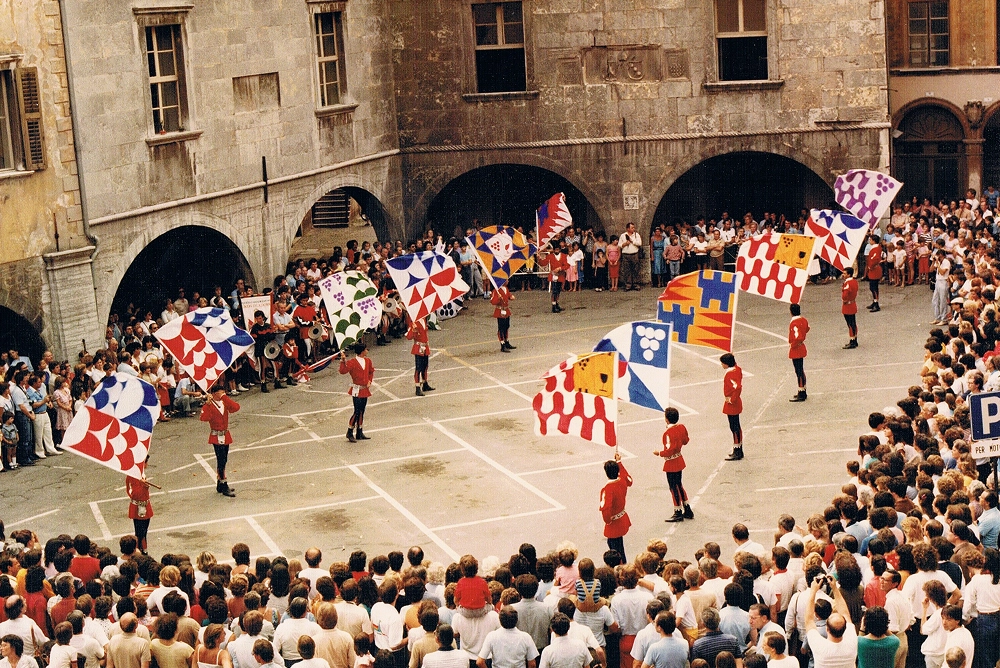
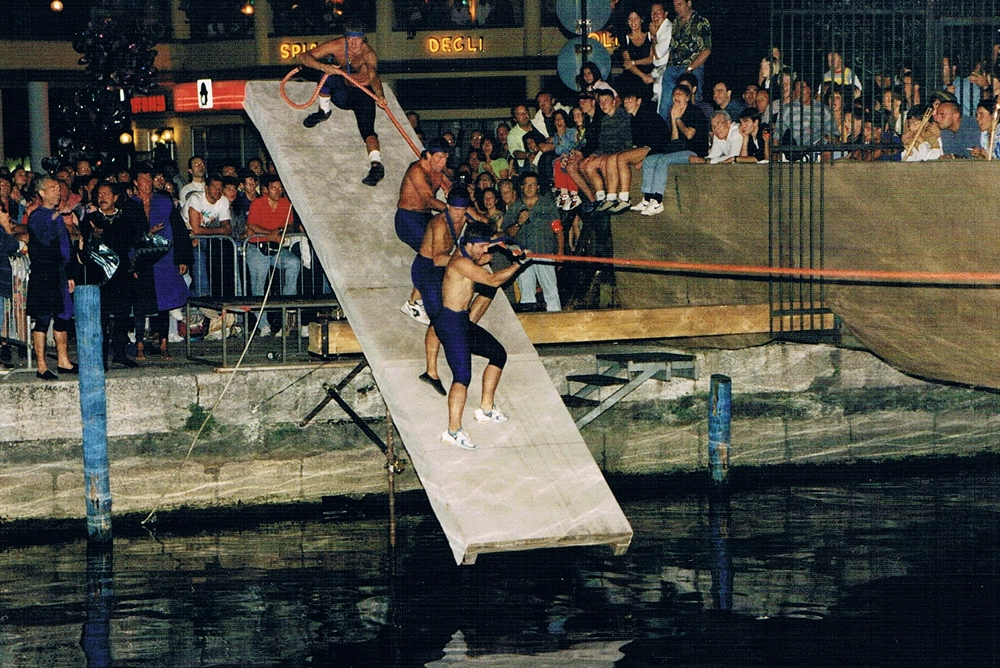
The theme chosen was a game capable of engaging the spirit of the various local associations, based on a re-enactment of the battle between the Venetians and the Milanese that had taken place in the 15th century in the waters off the town.
The Canale della Rocca was chosen as the venue for the games, in which various teams competed to win the different challenges.
The fireworks of those years were also designed to evoke the battle: the Bastione was "set ablaze", moving vessels "spitting" fire were deployed, and new rafts were positioned in the gulf as firing platforms.
Again, the success was enormous, and tens of thousands of visitors flooded into the town for each edition.
The first fairy tale edition
The "medieval" Notte di Fiaba lasted six years. During this period, medieval-style festivals were springing up in various parts of Trentino, similar to ours, and so the committee set itself the goal of transforming the event once again, while preserving its continuity.
The fairy tale is born.
So in 1999 the decision was made to give new meaning to the word "fairy tale" — to add to its sense of the fantastical and the wonderful the dimension of storytelling. The event was expanded to four days rather than just one Saturday, beginning with Alice in Wonderland and followed by Peter Pan, Mary Poppins, Pinocchio, Snow White and the Seven Dwarfs, The Wizard of Oz, The Jungle Book, Ali Baba and the Forty Thieves, Pippi Longstocking, The Sword in the Stone…
Today Notte di Fiaba devotes each edition to a single story, brought to life in countless ways — through storytellers, sets, performers, music and images — to entertain, as ever, young and old alike.